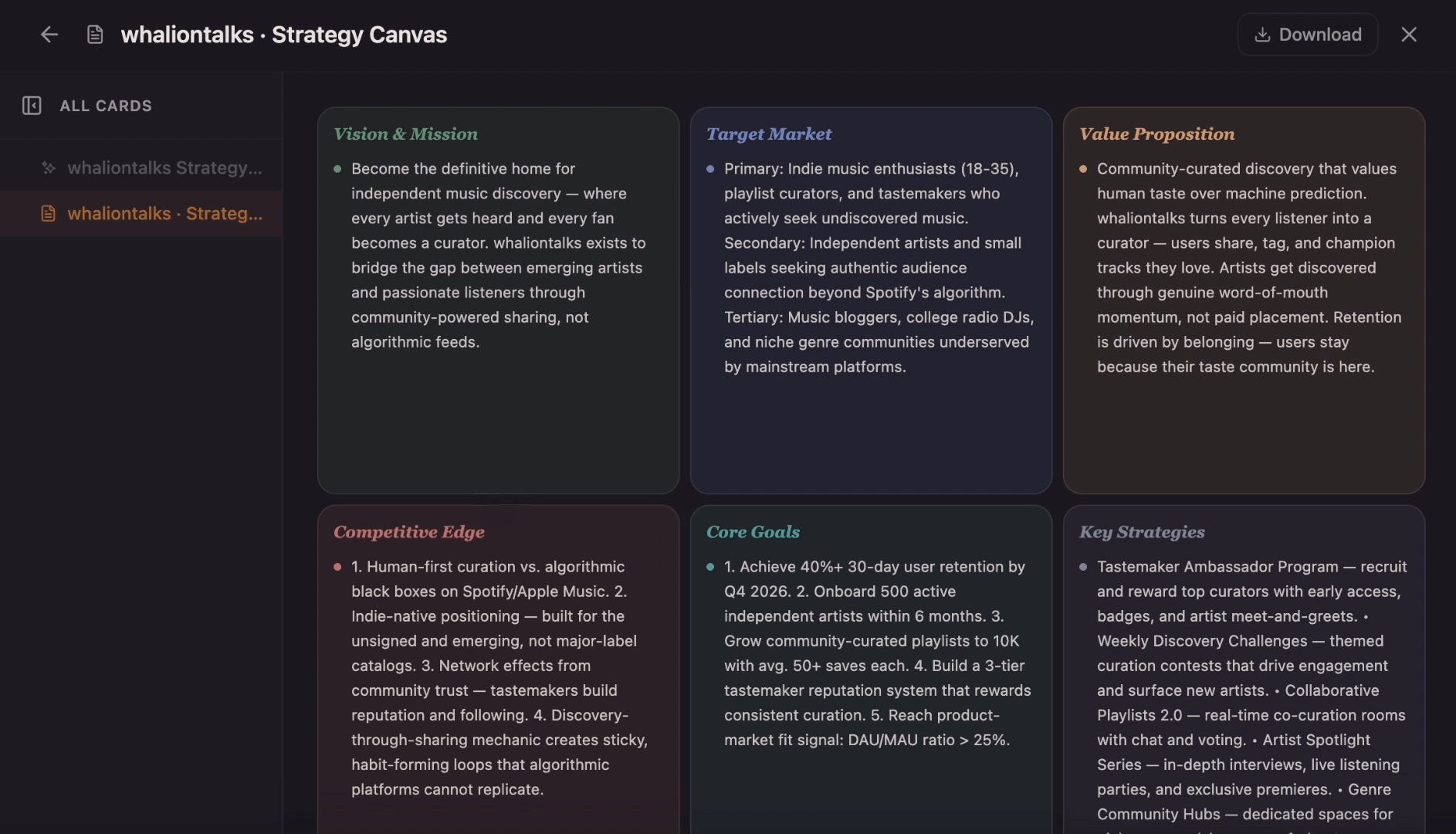
 Templates
Business Plan Template
Turn a rough business idea into a clear, visual business plan your team can refine, share, and execute.

Build a complete marketing plan with target audience profiles, messaging and positioning, channel tactics, campaign timeline, budget allocation, and KPI targets. Flowacts keeps the plan live as assumptions, spend, and campaign performance change.
Most marketing teams draft plans across separate documents: strategy in a slide deck, channel briefs in another file, and budget in a spreadsheet that goes stale quickly. This marketing plan template brings audience profiles, channel tactic maps, campaign timelines, messaging frameworks, budget allocation, and KPI targets into one connected canvas. Teams can assign section ownership, annotate strategic decisions, and refine the plan collaboratively as campaign data and market conditions change.
Traditional marketing plans become static PDFs the moment leadership signs off. Flowacts keeps the plan live on the canvas—when paid search CPC climbs 30%, the media buyer updates the budget section and Flowacts flags which channel mix assumptions need revision before overspend occurs. Campaign managers start with first-pass audience hypotheses, refine targeting as early data arrives, and brand leadership can trace exactly which positioning decisions drove the most recent messaging shift.
The template covers six core blocks: a target audience profile section, a channel-by-channel tactic map, a budget allocation tracker, a campaign timeline with milestone markers, a messaging and positioning framework, and a KPI measurement dashboard. Guided prompts help you populate each block and surface coverage gaps before your campaigns launch.
Use it at the start of a new quarter or fiscal year when setting channel strategies and budgets. Bring it out when launching a new product or entering a new market segment. It's also the right tool when aligning cross-functional teams—marketing, sales, and finance—around shared campaign objectives and revenue targets.
Click “Use Template” to open a new canvas with a marketing plan already prepared.
Edit the target audience, campaign goals, primary channels, and budget range to match your organization's current priorities.
Create a structured marketing plan with sections for audience profiles, channel tactic maps, budget allocation, campaign milestones, and KPI targets.
Ask follow-up questions, add channel-specific sub-plans, or adjust messaging and targeting assumptions as campaign data arrives and priorities shift.
Skip the frustration of staring at a daunting blank canvas—our templates do the foundational setup work for you right away.
When two teams plan overlapping campaigns for the same quarter, budget and messaging collisions stay invisible until launch week. Flowacts surfaces where channel spend overlaps and where messaging contradicts across audience segments, so alignment happens on the canvas instead of in emergency meetings.
Marketing budgets drift from plan within weeks of campaign launch—CPC rises, email sequences underperform, events get cut. The canvas keeps planned versus actual spend visible across all channels simultaneously, letting finance and marketing stay in sync without exporting a spreadsheet every Friday.
Every strategic bet—target audience size, expected conversion rate, cost-per-lead estimate—stays anchored to the tactic that depends on it. When an assumption proves wrong, Flowacts helps you trace exactly which downstream campaigns need adjustment before the plan accrues wasted budget.
Got a question about how this specific canvas behaves? Here is what you need to know before you get started.
A marketing plan is a strategic document that defines how a business will promote its products or services over a set time period. It maps out the target audience, marketing channels, messaging approach, budget, and success metrics—translating broad business goals into specific campaigns and activities teams can actually execute.
A marketing strategy defines where you're going and why: your target market, competitive positioning, and value proposition. A marketing plan is the execution roadmap—it documents the specific tactics, timelines, channel mix, and budget required to carry that strategy forward over a given period. Strategy answers “what we're trying to achieve”; the plan answers “exactly how, when, and who.”
At minimum: a target audience profile, a summary of business objectives, a channel strategy covering which platforms and what messaging, a budget breakdown, a campaign timeline, and KPIs you'll use to measure success. Larger organizations often add a competitive analysis, a SWOT summary, and a departmental ownership map. The depth should match the complexity and duration of your campaigns.
Start by defining two or three concrete business goals for the next quarter—for example, increase trial signups by 20% or generate 50 qualified leads per month. Identify the audience most likely to respond, choose one or two channels where they're active, set a realistic budget, and document your messaging and success metrics. Keep it focused: a tight one-page plan beats a thirty-page document nobody reads. Flowacts can help you structure this quickly and refine it as early campaign results come in.
Most teams review tactical elements monthly—channel performance, budget pacing, creative results—and do a full strategic revision quarterly. If a major competitor shifts positioning, a product launch gets rescheduled, or channel costs change sharply, update the relevant sections immediately rather than waiting for the next scheduled review. A plan that reflects current reality is more useful than one that's polished but already wrong.
Yes. This marketing plan template can be used to create a social media marketing plan, content marketing plan, digital marketing plan, or campaign marketing plan. Start with your target audience and messaging, map the right channels and tactics, set a campaign timeline and budget, then track KPIs in the same canvas.
Browse related template categories to find more workflows connected to this template.
Keep going with templates and tools for the same workflow.
TemplatesTurn a rough business idea into a clear, visual business plan your team can refine, share, and execute.
 Tools
ToolsCreate a project plan from a goal, brief, launch idea, client request, or team initiative. Map scope, tasks, owners, milestones, deadlines, risks, and resources into one editable planning canvas.
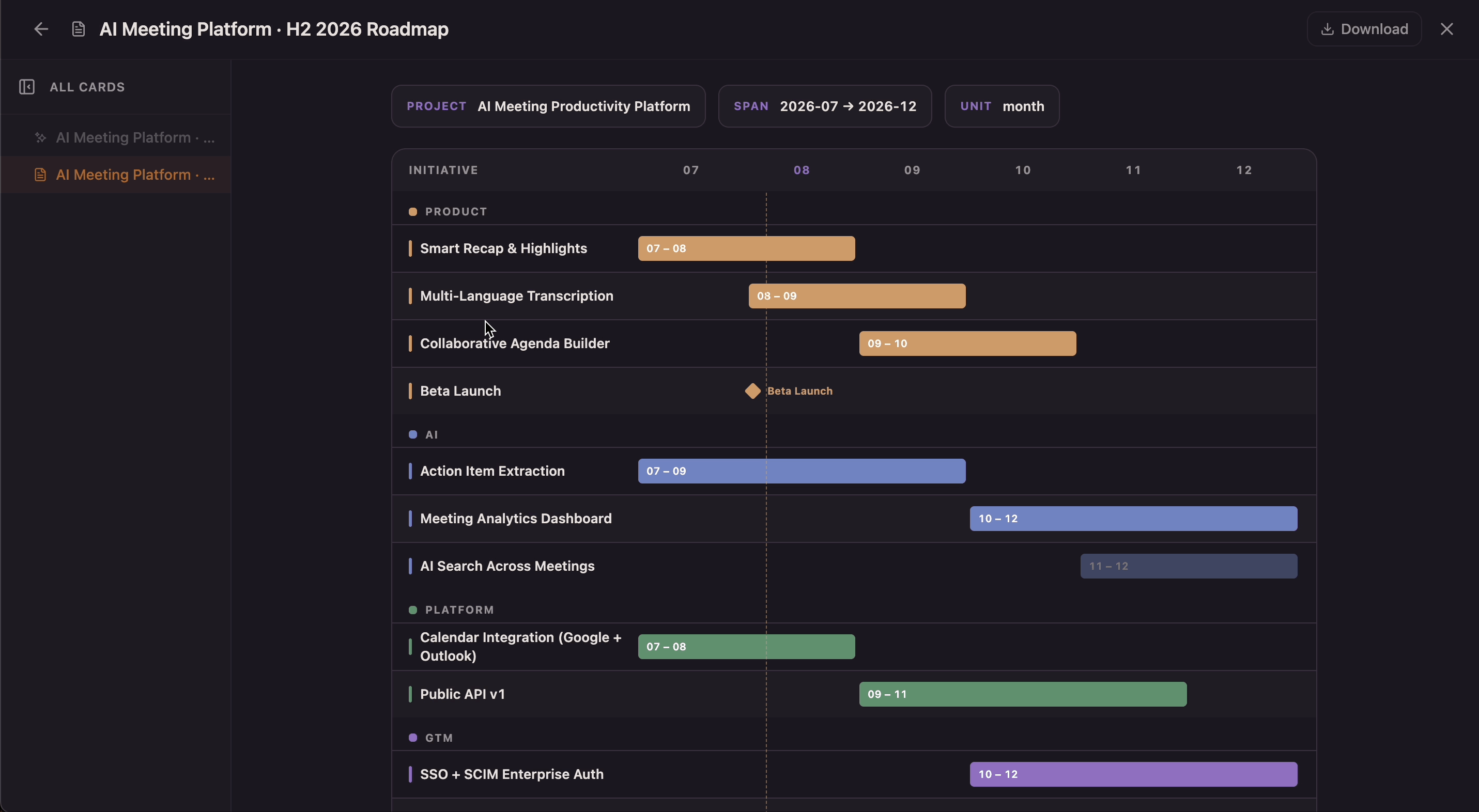 Templates
Build a visual roadmap with monthly timeline lanes, grouped initiatives, milestones, launch markers, and current-month indicators in one shared canvas. Flowacts helps teams turn strategic plans into a timeline view that stays easy to scan as priorities and dates shift.
 Tools
ToolsCreate a Gantt chart from a task list, project brief, launch plan, or schedule notes. Map start dates, end dates, durations, dependencies, task owners, progress, and milestones on a visual project timeline.