Business Proposal Template
Turn scattered sections, pricing notes, and client details into one clear business proposal that maps the problem, solution, and timeline, while Flowacts keeps your pitch tailored to each client.
TEMPLATE
Turn a rough business idea into a clear, visual business plan your team can refine, share, and execute.
This business plan template helps founders, startups, small business owners, and strategy teams turn early ideas into a clear visual plan. Start with a guided prompt, then organize your executive summary, market analysis, revenue model, financial assumptions, risks, milestones, and next steps on an editable canvas.
Teams use this template to turn business planning into a shared workspace instead of a one-time document task. The canvas helps everyone see how the market, customers, revenue model, costs, risks, and milestones connect, so gaps are easier to spot and next steps are easier to define.
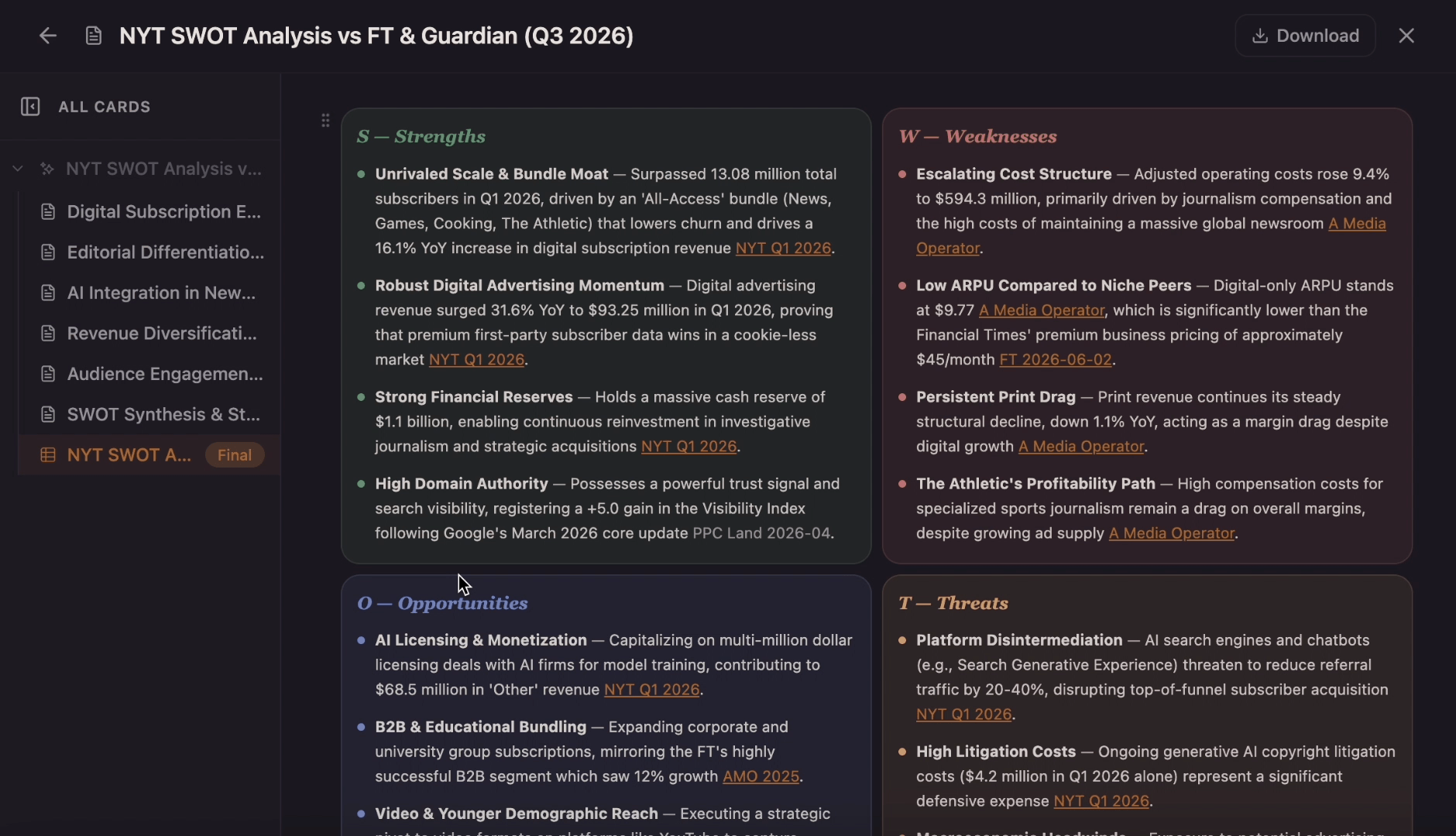
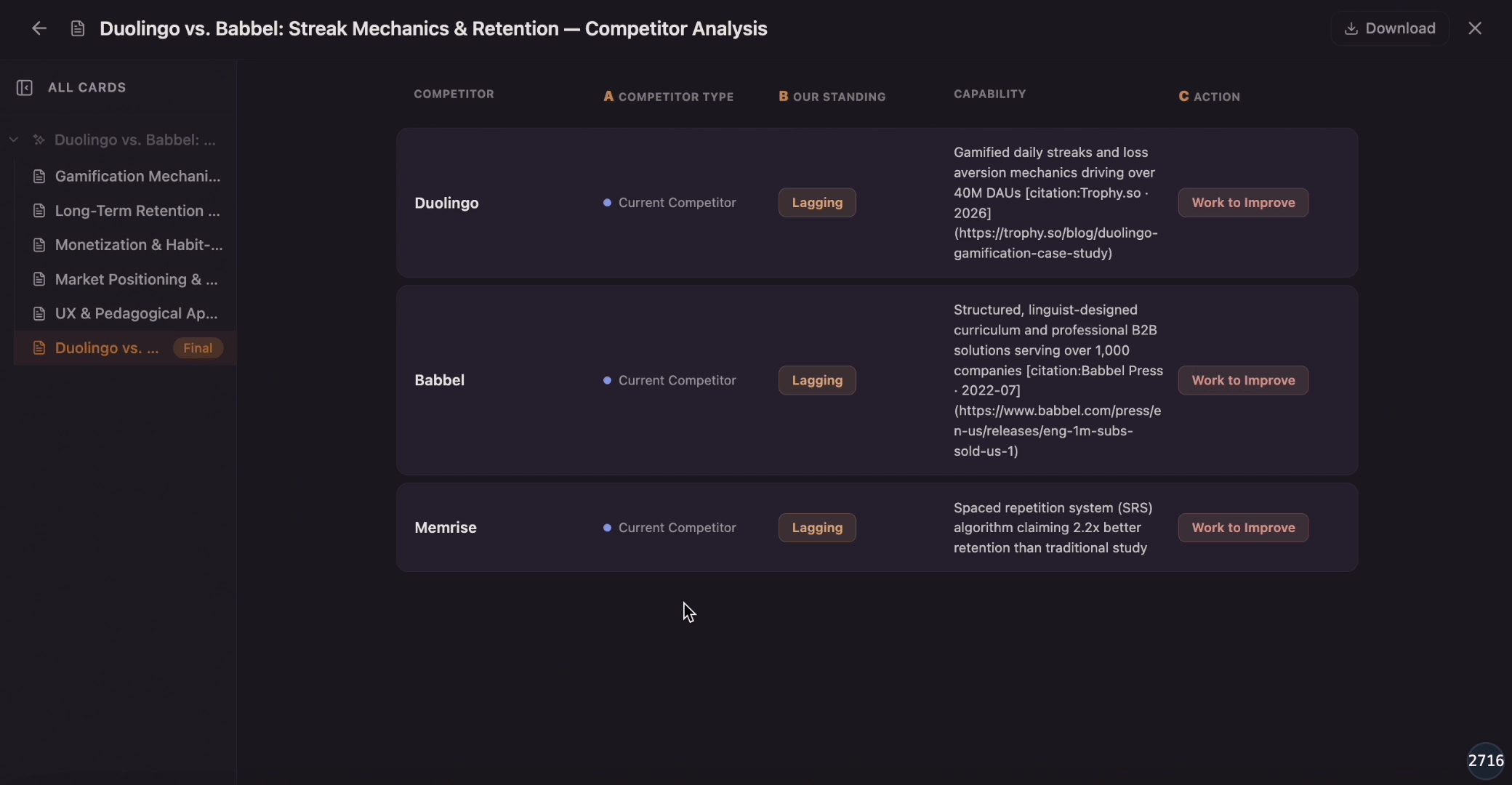
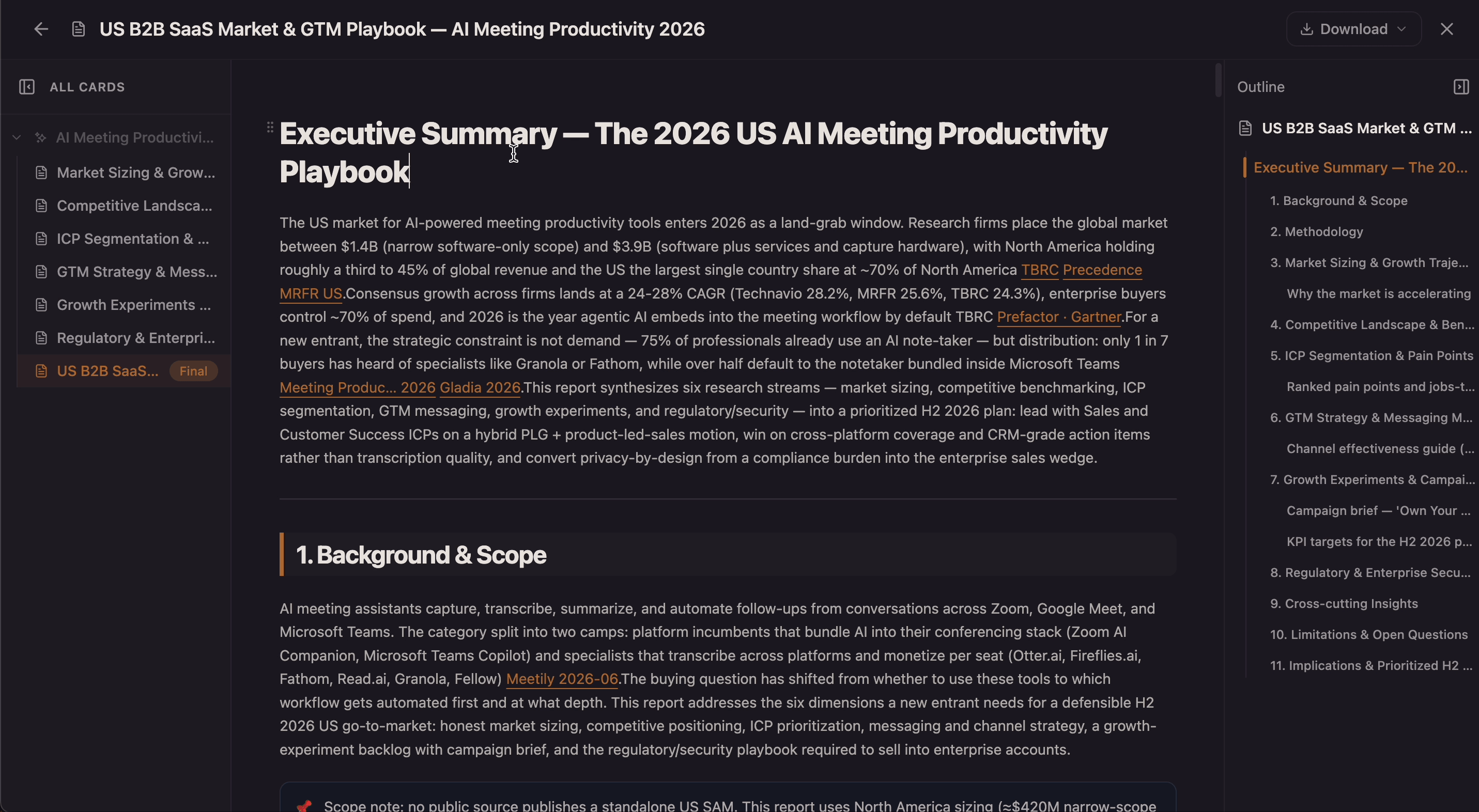
The template features integrated sections for mapping your executive summary, market analysis, business model, and operational milestones. It provides a structured space to synthesize financial assumptions, competitor insights, and core problem-solution alignment. This comprehensive framework keeps your entire strategy connected in one collaborative canvas.
Use this business plan template when launching a startup, planning a small business, preparing for investor conversations, validating a new product idea, or aligning your team around a new strategic direction.
Click “Use Template” to open a new canvas with a business plan prompt already prepared.
Edit the business idea, industry, target customers, business model, and planning goal to match your situation.
Create a structured business plan canvas with sections for executive summary, market analysis, revenue model, financial assumptions, risks, milestones, and next steps.
Ask follow-up questions, add new sections, or adjust the plan as your business idea changes.
Skip the frustration of staring at a daunting blank canvas—our templates do the foundational setup work for you right away.
Turn rough business concepts into organized sections for market analysis, customer segments, revenue models, risk factors, and strategic milestones
Map your business plan as connected blocks so your team can understand the relationship between different drivers and easily spot missing assumptions.
Update the canvas through chat, add new sections as your insights grow, rewrite weak areas, and turn high-level strategy into concrete next steps.
Got a question about how this specific canvas behaves? Here is what you need to know before you get started.
A business plan template is a structured framework for organizing the key parts of a business plan, including your executive summary, market analysis, customer segments, business model, financial assumptions, risks, and milestones.
Yes. Before you generate the canvas, you can easily add details about your specific business type or target market right in the chat bar so the initial layout perfectly fits your industry.
You can expand your strategy anytime by simply telling the AI what you need next. Just type a quick request—like asking to add a competitor matrix—and it will instantly build that new section directly into your existing canvas.
Absolutely. While you can use the AI to map out ideas or brainstorm revenue models, you have complete manual control to plug in your own financial data, build custom tables, and adjust blocks directly on the board.
Yes. The underlying framework is highly adaptive. By adjusting the pre-loaded setup text to explain your specific monetization mix (like a hybrid B2B/SaaS model), the AI will automatically customize the visual blocks to match that exact architecture.
Yes. You can invite your core team directly into the workspace for live strategy sessions, or export your final canvas into cleanly formatted presentation styles and document formats to share with external stakeholders.

Turn scattered sections, pricing notes, and client details into one clear business proposal that maps the problem, solution, and timeline, while Flowacts keeps your pitch tailored to each client.

What turns “get better at marketing” into a goal you can actually hit? Set an objective and a timeframe, then work each goal through the five SMART cells — Specific, Measurable, Achievable, Relevant, Time-bound — with an owner and a due date attached.