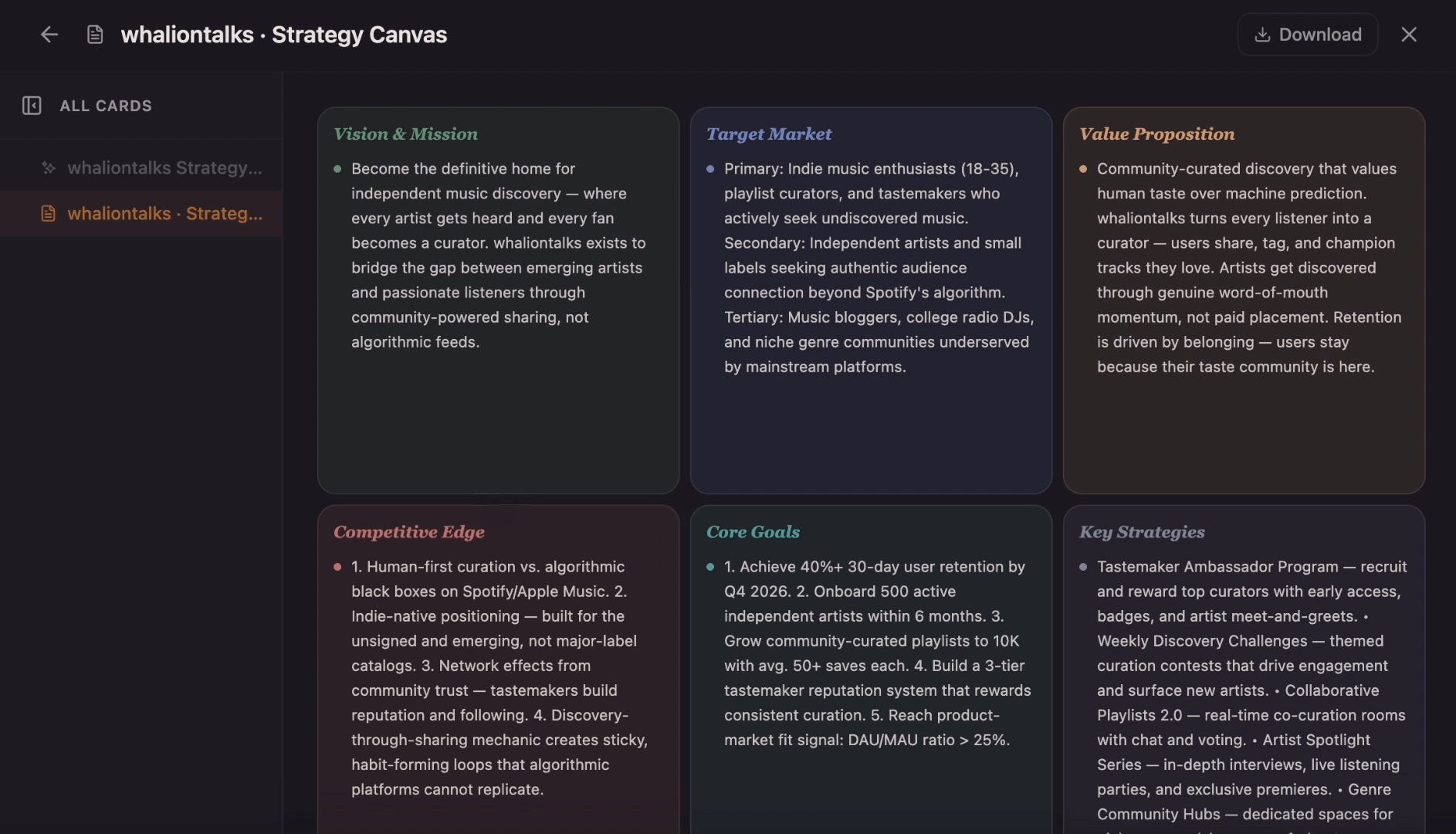
 Templates
Business Plan Template
Turn a rough business idea into a clear, visual business plan your team can refine, share, and execute.

Create a structured business plan from a short idea, rough notes, or a company description. Flowacts helps organize your executive summary, target market, revenue model, costs, operations, risks, and milestones into a draft you can refine.
Use Flowacts to move from an early business idea to a practical plan structure without formatting every section from scratch.
01
Enter the business name, offer, target customers, location, stage, and planning goal. Add any notes about pricing, competitors, costs, funding needs, or launch timing if you already have them.
02
Flowacts turns your input into a business plan draft with sections such as executive summary, market opportunity, customer profile, revenue model, marketing channels, operations, risks, assumptions, and milestones.
03
Review each section and replace guesses with stronger details. Tighten the target market, adjust the pricing logic, add research, and shape the plan for a founder discussion, lender review, stakeholder update, or pitch outline.
A business plan is a structured document that explains what a business sells, who it serves, how it makes money, and what must happen next. A business plan generator helps create that structure faster by turning your idea and supporting details into an organized draft.
For founders, operators, and small business owners, a useful plan is not only a polished document. It makes the assumptions visible: customer demand, competitive advantage, pricing, costs, sales channels, operations, risks, milestones, and funding needs.
Business plans work because they make a business easier to inspect before money, time, or reputation is committed. A good plan brings the story, market, operations, and numbers into one structure so the weak spots are easier to see.

A business plan connects the offer, customer, pricing, costs, and revenue logic in one place. That makes it easier to spot assumptions that need research before launch.

Partners, lenders, investors, and teammates need more than scattered notes. A plan gives them a shared way to review the market, operations, risks, milestones, and funding needs.

Once the plan is drafted, the next documents become easier to create. The same sections can support a pitch deck, business model canvas, SWOT analysis, financial plan, or launch roadmap.
Keep going with templates and tools for the same workflow.
TemplatesTurn a rough business idea into a clear, visual business plan your team can refine, share, and execute.
 Tools
ToolsCreate a clear SWOT matrix for a business, product, project, or personal goal. Flowacts helps you separate strengths, weaknesses, opportunities, and threats so your strategy review starts with sharper evidence.
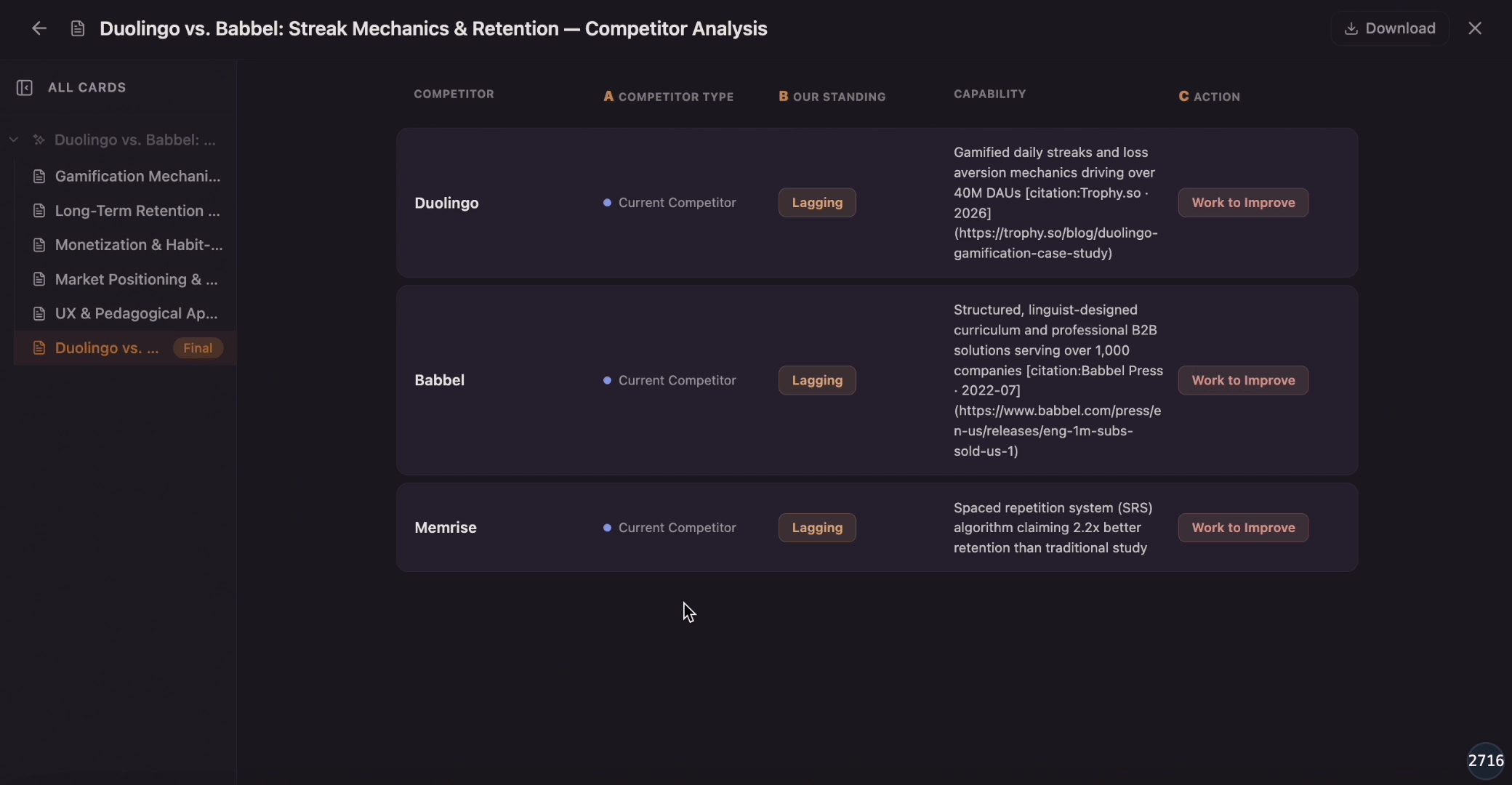 Templates
Build a structured competitor analysis on an editable canvas instead of a static spreadsheet. Use chat to add competitors, compare positioning, evaluate strengths and weaknesses, and turn market research into a clear strategic map your team can act on.
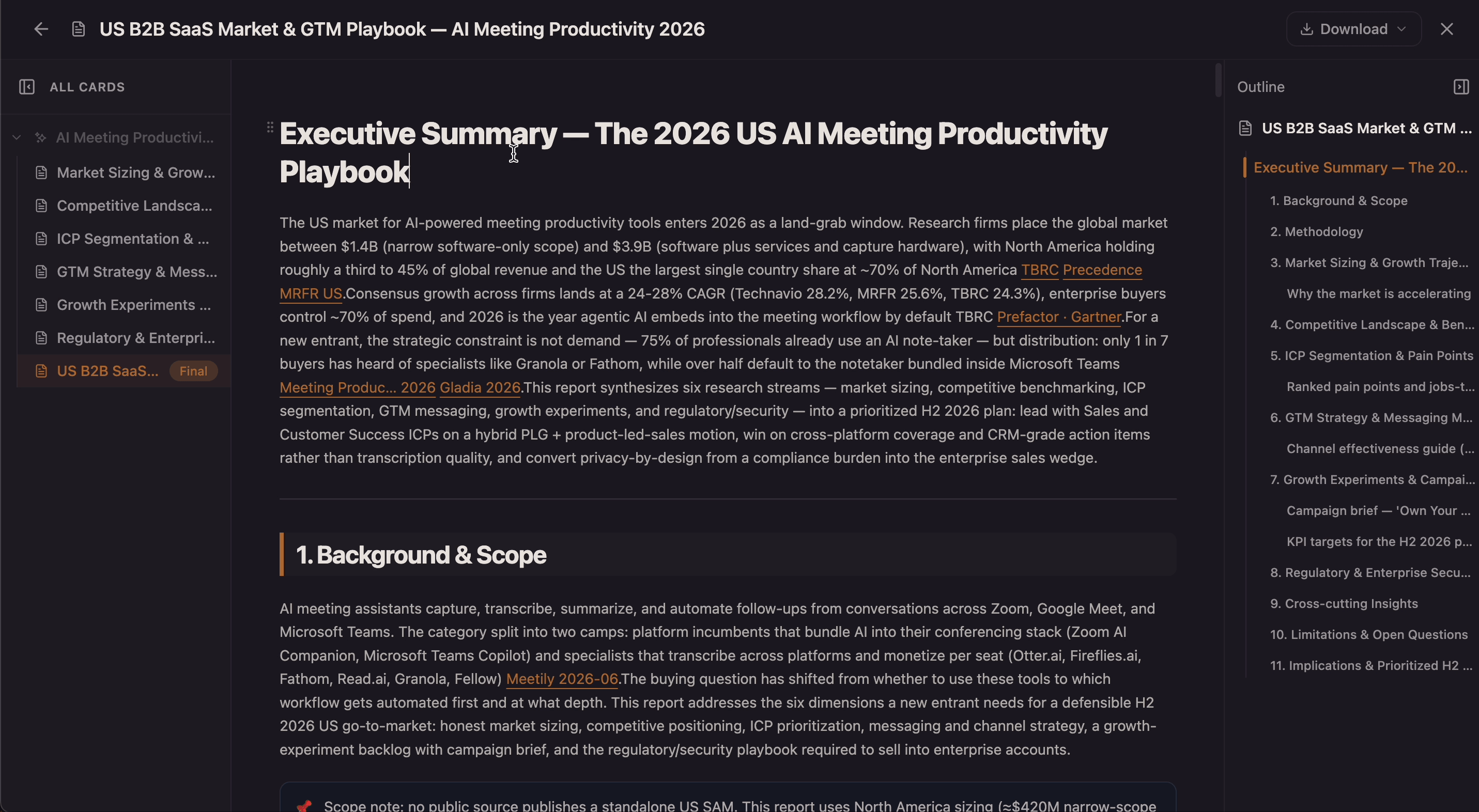 Templates
Build a complete marketing plan with target audience profiles, messaging and positioning, channel tactics, campaign timeline, budget allocation, and KPI targets. Flowacts keeps the plan live as assumptions, spend, and campaign performance change.
Business plan generator questions usually come down to inputs, AI quality, ChatGPT alternatives, free access, and how much human review the plan still needs.
A business plan generator is a tool that helps turn a business idea into a structured plan draft. Instead of starting with a blank document, you provide context such as your product, target customer, market, revenue model, and goals, then refine the generated sections.
Start by describing the business in plain language. Include what you sell, who you serve, how you plan to reach customers, and any pricing, cost, or funding details you already know. Flowacts uses that context to create a plan structure you can review and improve.
Yes. A startup plan can cover the problem, solution, target market, competitive advantage, revenue model, launch milestones, risks, and funding needs. Keep the draft honest about assumptions that still need customer research or financial validation.
Yes. You can start creating a business plan in Flowacts from the tool page, then review any account, usage, export, or sharing limits in the product.
Start with one idea. Leave with a canvas full of context, evidence, alignment, and next actions.